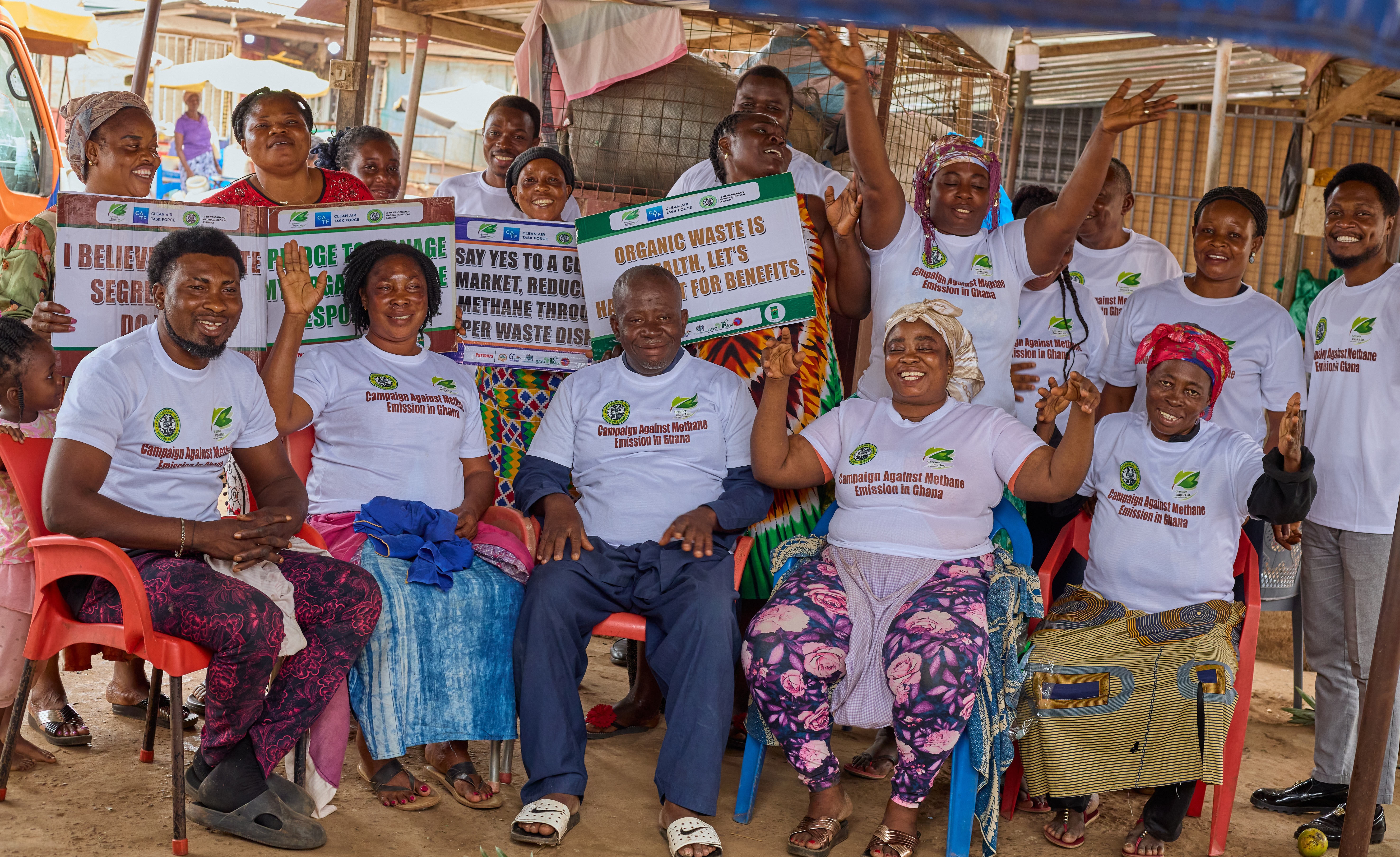
Greener Impact International (GII) as part of Campaign Against Methane Emission in Ghana (CAMEG). has raised awareness among women at the Bohye Market in Madina on proper waste disposal and sustainable waste management practices. The community outreach directly engaged hundreds of women and further reached more than 5000 people through GII’s social media platforms with key messages promoting waste reduction, separation, and proper disposal.
Why Waste Matters for Methane Reduction
Methane is one of the most powerful greenhouse gases, trapping over 25 times more heat than carbon dioxide in the short term. In Ghana, a significant amount of methane is emitted from waste in landfills, particularly food waste that decomposes without proper management.
Marketplaces where large volumes of perishable goods are sold daily are critical hotspots for food loss and waste. Spoiled or unsold produce often ends up in open dumpsites, quietly contributing to methane emissions and accelerating climate change.
Empowering Market Women Through Practical Solutions
The campaign recognizes the central role market women play in food distribution and household nutrition across Ghana. By engaging them directly, GII aims to empower market women with practical knowledge that supports both food preservation and improved waste management.
During the outreach, participants were introduced to simple but effective practices such as:
1. Sorting waste at source
2. Composting organic waste
3. Reducing wastage through timely preservation
4. Donating unsold produce where possible
These steps are intended to help reduce the amount of organic waste that ends up decomposing improperly and producing methane.
Part of a Bigger Campaign
The CAMEG campaign was launched with support from the Clean Air Task Force (CATF) as an initiative to support Ghana’s efforts in meeting its obligations under the Global Methane Pledge.
The campaign adopts a whole-of-community approach, targeting policymakers, NGOs, the media, schools, and local communities. Together, these efforts are designed to spark a collective shift in how methane emissions is understood and addressed in Ghana.