Climate change is the greatest challenge facing the world today and it is caused by increased concentration of greenhouse gases in the atmosphere. Methane gas which has its sources from Fossil fuel extraction and production, livestock digestion (enteric fermentation), rice cultivation, landfills, and wastewater treatment is considered a powerful greenhouse gas with a higher global warming potential than carbon dioxide over a relatively short timescale. It is estimated to be over 25 times more effective at trapping heat in the atmosphere compared to CO2. Reducing methane emissions is therefore critical if the fight against climate change is to be won.
At COP 26, in November 2021 Countries representing 45% of global methane emissions pledged to reduce their emissions by at least 30% below 2020 level by 2030 . In Ghana, Methane has been identified to be the second most important Climate Pollutant (LLCP) (greenhouse gas - GHG) after carbon dioxide . Efforts to address methane emissions has taken several policy interventions. For example, following the adoption of the Paris Agreement, Ghana launched a national action plan to mitigate short-lived climate pollutants, which has been well featured in Ghana’s Nationally Determined Contributions. Efforts to significantly reduce methane emissions and to achieve Ghana’s target related to the Global Methane Pledge will require collaborative efforts and support from civil society organisations including the media.
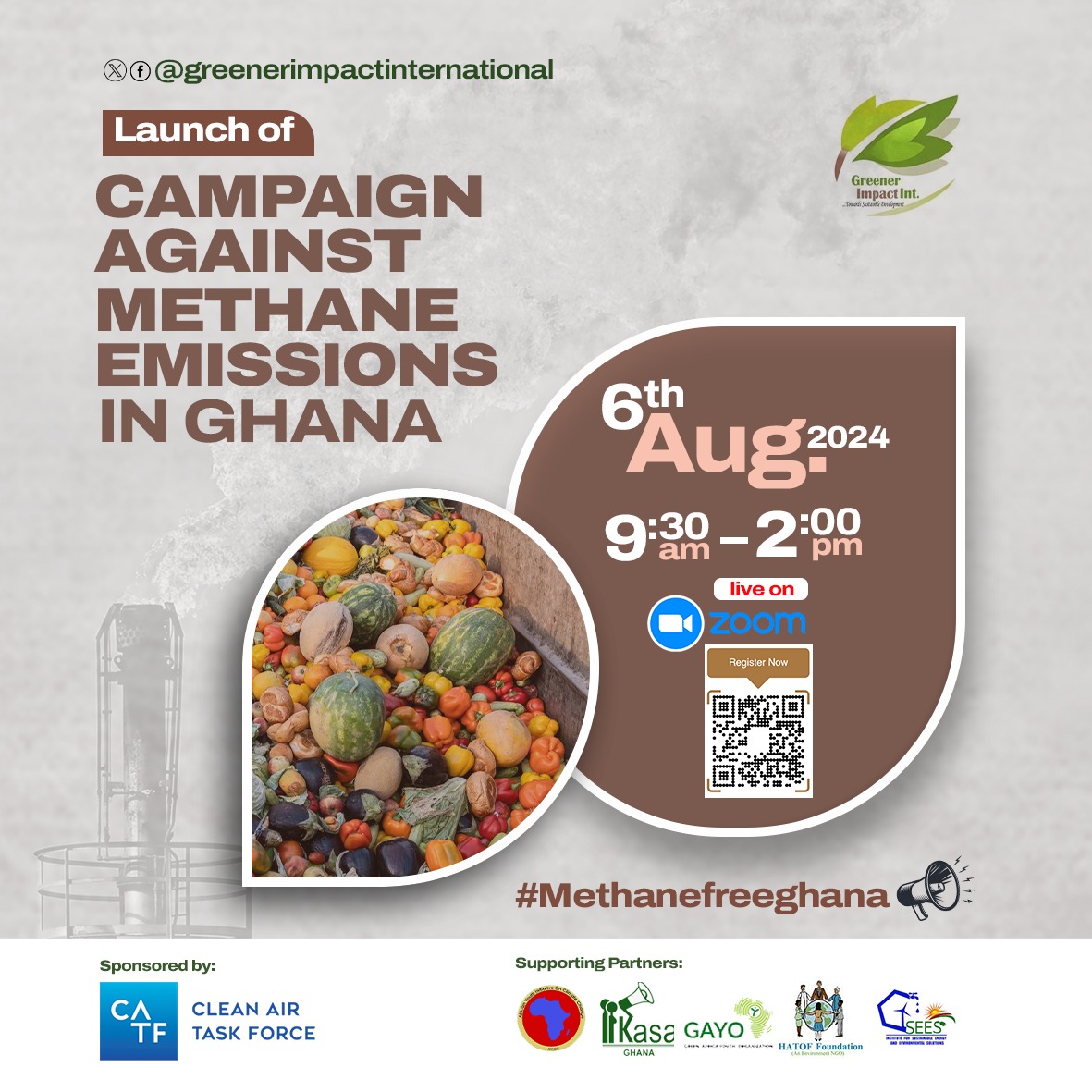
The campaign against methane emission in Ghana (CAMEG) is an initiative led by Greener Impact International (GII) with support from the Clean Air Task Force (CATF) to raise awareness among the public about the impact of methane on climate change and health and to mobilize national and local action against methane emission in Ghana. The campaign will deliver outcomes that will contribute to Ghana’s climate change mitigation ambition and align with efforts to achieve targets under the global methane pledge.
In 2023, GII conducted a study on methane emission and management in Ghana taking the case of Nsawam Adoagyiri and La Nkwatanang Madina Municipal Assemblies and this was followed with a workshop to strengthen the capacity of Ghana CSO’s capacity on methane action laying the grounds for this campaign.
The lined up of activities for the campaign include public education and awareness, schools and community engagements, policy advocacy and social media engagements. The campaign will leverage partnerships with other national-level NGOs including the HATOF Foundation, the Institute of Sustainable Energy and Environmental Solutions (ISEES), the CSO platform on Sustainable Development Goals, and the KASA Initiative.